The History and Heritage of Wooden Inlay Craftsmanship
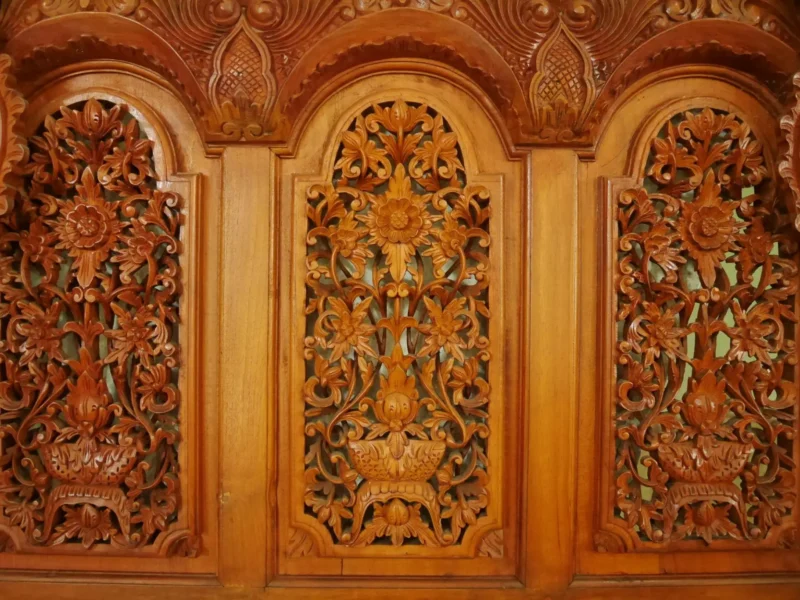
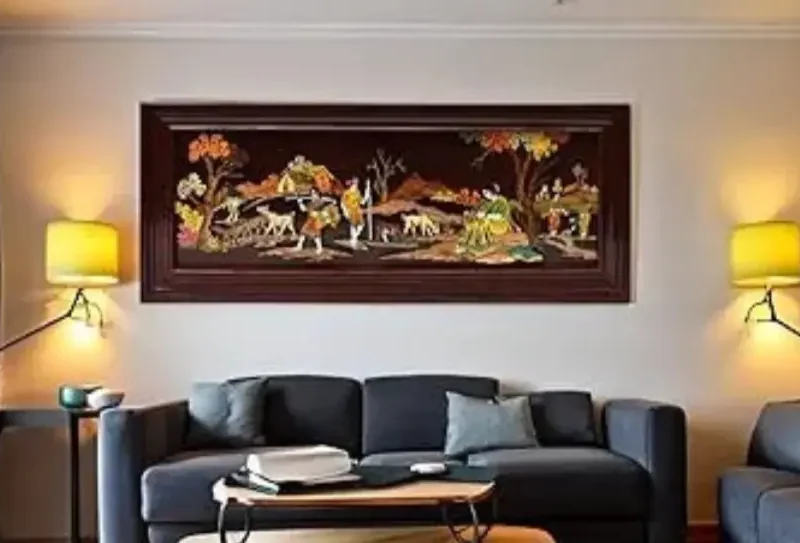
The art of wooden inlay is one of the most beautiful decorative art. The achievement of the minute mastership of art is linked by aesthetic ideas. Widely acclaimed due to sensitive patterns and delicate completeness. Inlay work has been widely applied on staying royal and other furniture. As also on works of architecture, jewellery and musical instruments. The project is not just technique in the sphere of art, but it is the culture which should be continued over centuries. and which has to be the history of civilisations, trade and human imagination.
 Wooden Inlay History
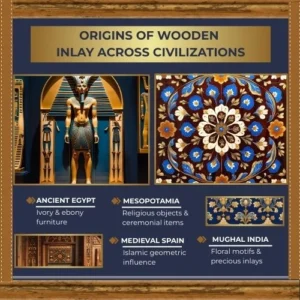
The origin of wooden inlay dates as far back as several thousands of years. In ancient Egypt it has been found that furniture was carved with ivory, ebony, and precious stones by the craftsmen using inlay decoration on furniture designs. The use of inlay also became significant in Mesopotamia and Greece, where the purpose of inlay was to produce ceremonial items, religious objects and also palace interior decoration.
The trade and cultural exchange roughly came around in the mediaeval period when wooden inlay got to Europe. Complex geometric inlay in Spain was introduced with Islamic rule. In turn influenced Gothic and Renaissance in the region of Europe. This introduction of Islamic arts into the wooden inlay created picturesque art designs which were both symbolic and decorative. Since they were characterised by extensive use of symmetrical designs.
The global distribution
Inlay was introduced to Asia through the effects of the trade routes. Such as the Silk Road and was introduced into use in Europe. The Mughal emperors in India took up. They perfected the method as they assimilated portions of Persian, Central Asian and local Indian forms. The culture of the wooden inlay is another place that was popular in other areas of India, like Rajasthan and Gujarat. Craftsmen began to use sandalwood, rosewood and teak before carving on them and embedding them with ivory, bone, and mother-of-pearl.
Inlay techniques were developed in East Asia, especially in China and Japan. But the Japanese adopted a special style in which lacquered woodwork relies on the inlay of shell, gold and silver. Simultaneously, the situation in the Ottoman Empire was fostering the wooden inlay as a part of a luxurious interior. Inlay was applied to the doors, ceilings, and furniture of palaces and mosques.
Art in the Making
An artful piece with the maximum precision is wood inlay. To start with, one selects the foundation wood; this is preferred to be hardwood, preferably walnut, teak or rosewood. All of which are preferred because of their durability and variety of colours. There the artisans then pick the inlaying materials. This could be in the form of contrasting woods, ivory, bone, shell, brass or even semi-precious stones.
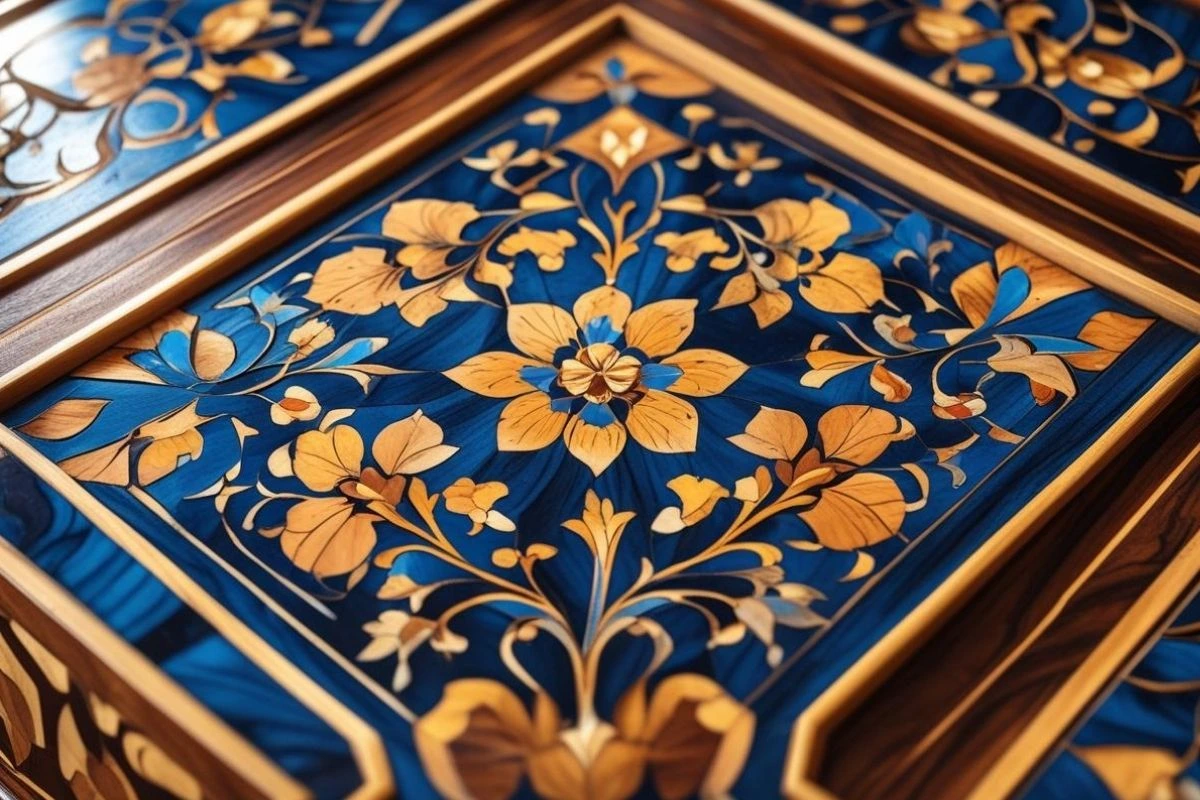
This is carved and marked on the wood surface. The craftsman carves the fine carvings by using the chisels and knives. To the depth of these grooves, the inlay materials are then cut to size in such a way that they fit so well in the grooves with utmost accuracy. ahis requires a lot of patience. Having the pieces laid out, the ground is straightened, the pattern smoothed and sometimes varnished, revealing a smooth, intricate composition, which seems to have been created by the wood itself.
Cultural Significance
Inlay art can be elegant; more than that, inlay art carries real cultural content. Islamic art is an example where the objects with a geometrical pattern apply, which was created to mean that it was infinite. Vine decorations and flowers used by the Indian people are seen as symbols of prosperity, life, and blossom. Marquetry of the Renaissance European region was rather painterly by depicting scenes of mythology and rather illustrative.
The Resurrection and the Death
This is facilitated by the introduction of the Industrial Revolution that introduced the method of mass production. That reduced the need to use inlay work since this would involve the use of hands to perform the task. The expensive artisan crafts were substituted with machine-produced alternatives which were cheaper. Taste in old-style wooden inlay. However, was rediscovered in the late 20th and early 21st centuries. The art has come back to the spotlight due to cultural preservation movements. The introduction of artisan cooperatives and the growing interest in handmade work.
Living Heritage
Wooden inlay has not been a decorative art only, but it has been a reminder to the world that there are people and there is progress. Every pattern, every bit of wood that has been cut with some accuracy, has a story to tell, and that is a linkage to the past and the present. Preservation of this culture implies that future generations would have the chance to admire, to learn and to feel inspired by the sheer mastery of the art of inlay.
Wooden inlay is a confirmation of the grace of time, craft and tradition in a world where objects which are made in very large numbers are quickly replacing all other things. It is an art form that is very costly in terms of time but returns eternal beauty.