How Perfumery Combines Art and Science to Create Timeless Scents
There has always been something enigmatic about perfume. It is intangible and memorable, intimate and general. Behind any iconic fragrance is not only an elegant combination of ingredients but also a union of two different worlds: art and science. Perfumery is the place where creativity and strict chemistry collide and combines art and science. Where ancient traditions and contemporary creative solutions meet. It is this combination of art and technical skills that enables perfumers to create scents that will remain with our memory long after the initial spray.
 The Perfumery Artistic side.
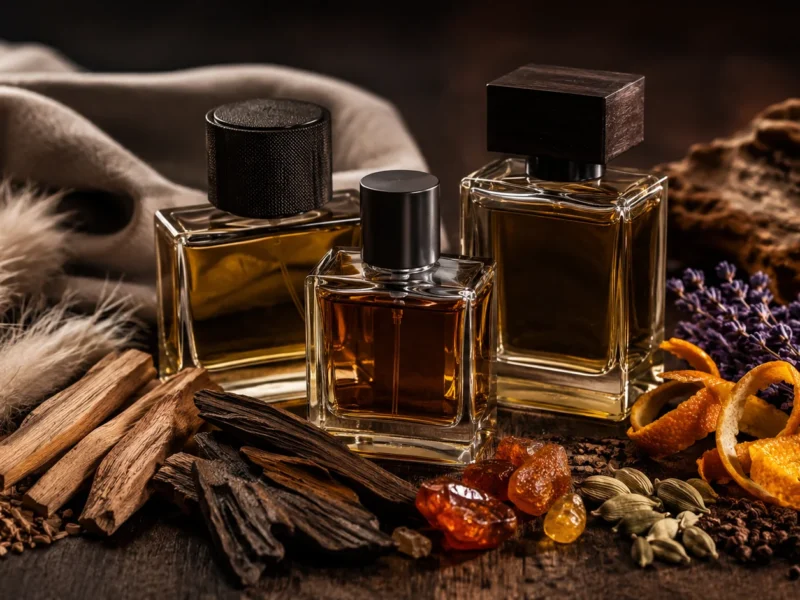
The art of creating fragrances is likened to writing music or creating a great painting. A perfumer, much like a musician, does this by balancing notes of fragrance together in a fragrance symphony – much like a musician balances notes in a musical symphony.
- Top notes are the first impression and quick and bright.
- A heart note is the heart of the perfume: it can be floral, spicy, or fruity.
- Base notes stay the longest and add richness and comfort with woods, musks or resins.
The notes need to be complementary to each other, in layers of emotion and narrative. The artistic issue is how to produce a scent that is pleasant-smelling but also provides a mood, recollection or identity. As an example, a new citrus mix may emit optimism and energy, and a deep oriental aroma may be associated with mystery and sensuality.
Perfumery is also an integrated form of cultural storytelling. The perfumes tend to be place-, time-, or mood-driven. A perfumer may be inspired by the crowded souks of Marrakech, the romantic gardens of Versailles or by the fresh mountain air of the Swiss Alps. Here the artistry is highly subjective and fanciful.
 The Science of the Scents.
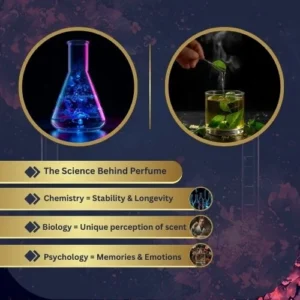
Whereas the artistry fills up the imagination, the science provides accuracy and permanency. Perfumery is well established in chemistry, biology and even psychology.
Chemistry enables the perfumers to learn about the structures and reactions of molecules. To prevent instability and to prolong longevity, natural extracts like rose or sandalwood have to be combined with synthetics.
Biology: biology is involved in our perception of scents. The way our olfactory senses perceive things is that one fragrance may smell slightly different to each individual.
Psychology describes the reasons behind some of the scents provoking emotions and memories. An example is lavender, which is linked to relaxation, and vanilla may create a feeling of warmth and nostalgia.
Perfumery has been brought a notch higher by modern technology into the science field. Perfumers can break down and reproduce the complex natural oils with the help of gas chromatography and mass spectrometry. Creative opportunities are also presented by synthetic molecules, enabling perfumers to develop smells that do not occur in nature, including the fresh so-called marine notes launched in the 1990s.
Striking a balance between nature and innovation.
A balance between natural raw materials and synthetic innovation is one of the most interesting elements of modern perfumery. Natural substances such as jasmine, oud, and bergamot have a historical and cultural background. Yet, they tend to be either scarce, costly, or polluting. The answers to this question can be found in science, which provides more stable synthetic alternatives that are also more ethical.
Another example is that real musk was previously obtained through animals but now is produced synthetically to ensure the safety of wildlife. Likewise, renewable ingredients, lab-produced molecules, and sustainable sourcing have become the central theme of sustainable perfumery initiatives. Such a cautious combination of nature and innovation makes it possible to achieve the flourishing of the art of perfumery without the need to undermine environmental responsibility.
Why Timeless Scents Endure
An eternal smell is not just a nice smell but a masterpiece which has a scientific basis. It is balanced, harmonious and long-lasting. It touches the heart, leaving a mark, which individuals take with them, and in many cases the mark is transferred through generations.
Classic perfumes are eternal, in that they not only record the universal human experience of love, nostalgia, adventure, and elegance but also retain the accuracy of science in composition and expression. The perfume is given its soul by the art and its structure and permanence by the science.
Final Thoughts
Neither an art nor a science, perfumery is the ideal combination of the two. The artistry brings in beauty, feeling and narration, and the science brings in precision, stability and innovation. They combine to make fragrances, which are worn as well as recalled, making the invisible molecules a permanent mark.
When you spray your favourite perfume next, keep in mind: in that one mist you find centuries of mastery and decades of scientific study equally working together to produce something eternal.