The History of Perfumery: From Ancient Civilisations to Modern Times
Perfumery is not only a luxury, but it is also an art form, which people have appreciated since thousands of years ago. Fragrances have been associated with culture, religion, prestige and self-identity. Since the days of incense-laden temples of ancient Egypt, perfumery has had as diverse and multi-layered a history as the scents themselves. To understand how the perfumery industry developed out of sacred rituals into the worldwide industry, we are going to go on a journey through time.
 The Birth of Perfumery in Ancient Civilisations
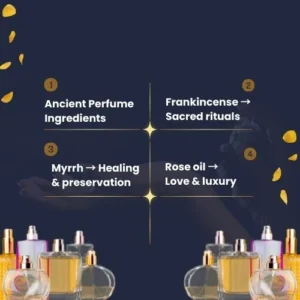
The earliest traces of perfumery date back more than 4,000 years. The ancient Egyptians were one of the earliest to accept the application of the scent in daily life and spirituality. Natural resins, oils and flowers were used to make perfumes. People incinerated incense in temples as sacrifices to the gods. Because they thought that fragrance linked the mortal realm with the divine. Even Cleopatra herself was no exception and was famous for using lavish perfumes as an instrument of seduction and power.
The Mesopotamians also had their major contributions to the history of perfume. Through archaeological findings, it is found out that they invented methods of distillation to get oils out of plants. A prelude to modern-day perfume-making. At the same time, in ancient India, perfumery was associated with Ayurveda. Whereby oils and incense were scented to encourage physical and spiritual health.
Perfume in Greece and Rome
As the perfumery diffused to Greece, it assumed a different dimension. The Greeks treated perfume as a luxury in their everyday lives and also as a sign of a culture. The smells were attributed to gods and mythology, and perfumed oils were very common in sports events, medicine and bathing.
Later on the Romans took the use of perfume to such great heights, never before seen. They scented nearly everything – baths, clothing, houses, even their pets. Roman elites tended to show off their wealth and status by keeping around them rare and exotic fragrances brought into their empire. It is in this period that fragrance actually gained its mark of classiness.
Perfumery in the Islamic Golden Age
The emergence of the Islamic Golden Age (8th-13thcentury) was a pivot in the history of perfumery. The art was transformed by scholars such as Avicenna, who brought in steam distillation that enabled the extraction of essential oils in a better way. This method is in use even today.
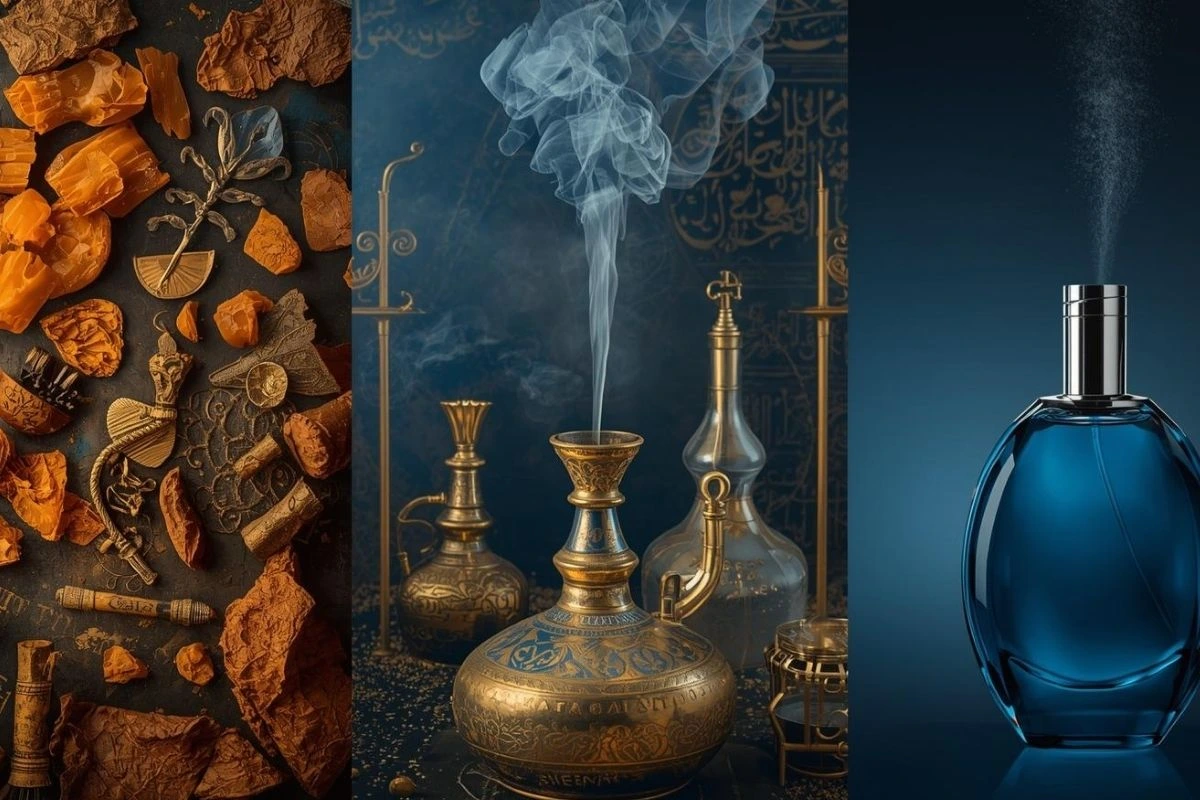
The culture of perfumes was brought to Europe and Asia by Arab merchants who brought such new ingredients as musk, amber and oud. The perfumery became so inherent in the Islamic culture. As the scented oils and incense were attended to in religious ceremonies, personal care and hospitality.
The Renaissance and the Rise of European Perfumery
Perfume had become firmly rooted in Europe by the Renaissance. Italy and France were turned into the most important centres of the perfume innovations. The Italian-born French queen Catherine de’ Medici is notorious for bringing her own perfumer. René loe Florentin, to the French court in the 16th century. The move formed the groundwork of the French dominance in perfumery.
In Renaissance Europe, perfumes could be used not only to make one look good but also to provide cleanliness. Bathing was not done very often, and perfumes helped to counteract unpleasant smells, so it was thought that they discouraged disease. The aristocracy and the royalty adopted perfumery, which became a measure of prestige and status.
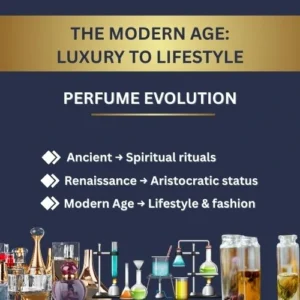 The Modern Age: Luxury to Lifestyle.
By the 18th century, the art of perfumery had become more complex, and more modern developments in chemistry were established. That witnessed the development of artificial smells due to synthetic fragrances. These inventions increased the opportunities of perfumery and made it cheaper and more accessible. The French perfume icons of the nineteenth and twentieth centuries, including Guerlain and Chanel, contributed to the creation of the modern-day industry.
The introduction of Chanel No. 5 in 1921 by Coco Chanel was a revolution. It was the first fragrance to smear the line between natural and synthetic products, and it became an unchanging perfume that is still building upon its success. This gave way to modern-day perfumery, where creativity, science and art come together.
Perfumes are nowadays not only a luxury of the elite but also an accessory to a lifestyle. The perfume industry has celebrity fragrances and luxury niche brands, and the industry serves all personalities and tastes. The sense of scent-layering, individual formulae, and eco-friendly ingredients are the signs of the contemporary customer who wishes to be individualised and mindful.
Conclusion
Perfumery history traces its origin to the everlasting love affair between humankind and smell. What started as a holy sacrifice in temples has become a billion-dollar industry worldwide, which influences how we develop identity, emotions and style. Perfume is more than a bottle of perfume; it is the culture, the art and the memories condensed into a timeless form.
Be it the allure of oud, the refreshing quality of citrus or the charm of floral notes, each spritz is heavy with thousands of years of culture. The history of perfumery, tracing its way back to primaeval civilisations and as far as modern times, is evidence that smell will and will always remain as inseparable an element of the human experience.